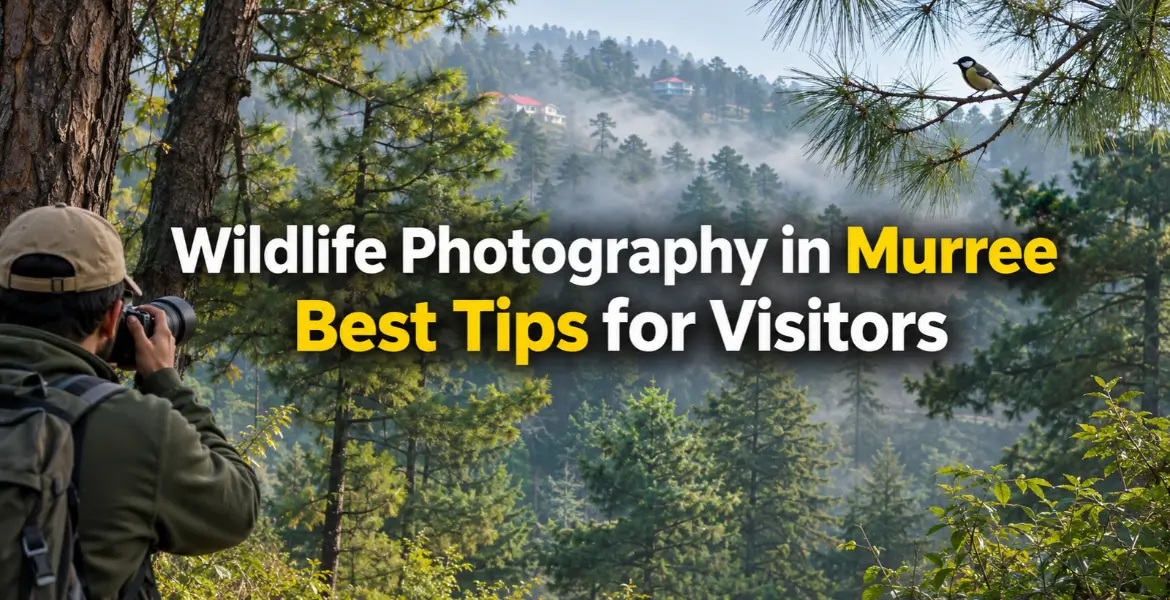
Murree’s pine-covered slopes, forest roads and cool mountain air make it an inviting place for nature photography. You don’t need to be a professional photographer to enjoy it: a phone camera, a little patience and a respectful approach can help you capture birds, forest details and the changing light across the hills.
The Murree region is part of a wider landscape of forests and wildlife habitats. Research on the Murree–Kotli Sattian–Kahuta area has documented a variety of birds and mammals, though what you encounter on a particular visit will depend on the location, season and conditions. A sighting is never guaranteed, so treat the landscape itself as part of the experience.
If you’re planning a nature-focused stay, MAS Holiday Homes in Barian can give you a place to return to after a day out exploring the hills. Here are practical tips to help you make the most of wildlife photography around Murree.
1. Set Realistic Expectations
Wildlife photography is different from photographing a landmark or a scenic viewpoint. Animals may be hidden in the trees, active when you aren’t expecting them, or simply absent from the spot where you stop. Instead of planning your day around a particular animal, look for a variety of subjects: birds in the branches, butterflies near flowers, interesting tree bark, forest paths, leaves after rain and distant views through the pines.
The wider Murree forest landscape supports many kinds of wildlife. The Punjab Wildlife and Parks Department describes Rawalpindi Forest, which includes areas across Murree and neighbouring tehsils, as a habitat for a diverse range of birds, mammals, reptiles and insects. That information speaks to the region as a whole; it doesn’t mean every species will be visible beside a road or at a visitor stop.
2. Choose the Right Time of Day
Early morning often brings softer light and a quieter atmosphere. It can be a good time to watch for birds and photograph forest scenery before visitor traffic increases. Late afternoon may also offer warm light filtering between the trees, while overcast conditions can bring out the texture and colour of foliage.
Try not to rush from one viewpoint to another. Pick a safe place to pause, listen and observe for a few minutes before taking pictures. You may notice movement or birdsong once you stop talking and walking. If you’re staying in Barian, plan your outing around daylight and local road conditions, and allow enough time to return comfortably.
3. Look for Birds Without Disturbing Them
Birds are among the most accessible subjects for visitors, but they can be difficult to photograph because they move quickly and may stay high in the canopy. Watch the branches and listen for calls. If you spot a bird, move slowly and keep a comfortable distance rather than following it from tree to tree.
A phone camera can work well when birds are nearby, but digital zoom often reduces image quality. If your phone has a telephoto lens, use it; otherwise, take a wider photograph and crop it later. With a camera, a longer lens can help you frame distant subjects without approaching them.
The Murree area has a history of birdlife research, including studies focused on the avifauna of the Murree Hills. Use local bird guides or a bird-identification app to help identify what you photograph, but check your observations carefully before naming a species in a caption.
4. Use the Available Light
In a forest, the light can change quickly. A patch of sunlight may brighten one part of a tree while the surrounding area remains shaded. Tap your phone screen on the subject to adjust focus and exposure. If the highlights look too bright, lower the exposure slightly; if the bird or plant is too dark, try a different angle where more natural light reaches it.
Avoid using flash on wildlife. It can startle animals, and it rarely improves a distant photograph. For scenic images, include the trees around your subject so the photograph shows the setting as well as the main point of interest. In mist or after light rain, take a moment to protect your camera and phone from moisture.
5. Bring Only What You Can Comfortably Carry
A heavy camera bag can make a walk less enjoyable, especially on uneven or sloping paths. Pack a phone or camera, spare battery or power bank, a cloth for cleaning the lens, water and any essentials you need for the day. If you use a camera, a versatile zoom lens may be more practical than carrying several lenses.
Before leaving MAS Holiday Homes, check that your devices are charged and that you have enough storage space. A quick lens clean can make a noticeable difference to image quality. Keep your equipment secure while walking and avoid changing lenses in dusty or damp conditions unless necessary.
6. Photograph from A Safe, Respectful Distance
Never approach an animal just to fill the frame. Do not chase, corner, touch or attempt to feed wildlife. If an animal changes its behaviour because of your presence, such as moving away, showing signs of alarm or becoming unusually focused on you—step back and give it space.
Keep children close when walking through wooded areas, and follow instructions from local authorities or park staff. If you visit Bansra Gali Murree Wildlife Park, remember that it is a managed wildlife attraction with listed animal exhibits. Check current access arrangements and visitor guidance before you go, and follow the facility’s rules for photography.
7. Stay on Appropriate Paths and Respect the Forest
A photograph is never worth damaging a habitat or entering a restricted area. Stay on marked or commonly used paths where available. Don’t break branches, pick flowers, move logs or disturb nests to improve a composition. Leave no litter, including food wrappers and plastic bottles.
Protected areas can have specific access and wildlife-protection rules. Before visiting a forest, park or sanctuary, check with the relevant local department about current restrictions. Punjab’s wildlife laws and rules are intended to protect species and habitats, so visitors should follow posted notices and staff instructions.
8. Make the Landscape Part of the Picture
Wildlife photographs don’t always need a close-up. A bird sitting in a pine tree, a butterfly among wild plants or a trail disappearing into the forest can tell a fuller story than a tightly cropped image. Try including foreground leaves or tree trunks to create depth. For a sense of scale, frame a small subject against the larger forest around it.
You can also photograph details that show the character of the hills: moss on a rock, rain on pine needles, sunlight passing through branches or clouds settling over a ridge. These images help build a memorable travel collection even when animals remain out of sight.
9. Be Careful with Location Sharing
If you photograph a rare animal, a nest or a sensitive habitat, think before posting precise location details online. Sharing an exact spot can bring extra visitors to an area that may not be suitable for disturbance. You can share the general region—such as Murree or Barian—without giving coordinates or directions to a vulnerable site.
When posting photographs, avoid captions that imply you saw an animal in the wild if the photograph was taken at a managed park or another controlled setting. Clear captions help readers understand the difference between natural habitat and a wildlife facility.
10. Plan A Relaxed Photography Day from Barian
A good wildlife photography outing can be simple: start early, choose one or two suitable areas, allow time to observe, and take breaks instead of trying to cover too much ground. Weather in the hills can shift, so bring a light layer and check local conditions before setting out. Keep some flexibility in your plan in case a path is busy, the weather changes or the best option is simply to enjoy a scenic stop.
MAS Holiday Homes in Barian offers visitors a place to unwind between outings in the Murree hills. You can spend the day exploring at a comfortable pace, then return to your accommodation to review your photographs, recharge your devices and plan the next day. For visitors travelling with family, that balance of outdoor time and a restful stay can make a nature trip easier to enjoy.
Conclusion
Wildlife photography in Murree rewards patience, observation and respect for the natural environment. Start with the birds and forest details you can safely observe, use the light available to you, and give animals plenty of space. You may come home with a striking photograph or simply a quieter, closer appreciation of the hills.
For a stay near this mountain landscape, MAS Holiday Homes in Barian can be part of your Murree trip plan. Enjoy the forest responsibly, follow local guidance and let each outing unfold at its own pace.